Akron basement tips
Why Do So Many Akron Basements Leak?
Ask anyone who has owned a home in Akron for a few years and they’ll have a wet basement story. It isn’t bad luck. Four local things stack up against Akron foundations: heavy clay soil, a wet climate, hard freeze–thaw winters, and homes built long before modern drainage. Here’s how each one works, and what it means for your basement.
- The 4 local causes, in plain English
- How to tell which one is hitting your home
- What actually fixes each one
Cause 1
Clay Soil That Holds Water Against Your Walls
Much of Akron sits on clay-rich glacial soil left behind by the last ice age. Clay is made of tiny, flat particles packed tightly together, so water soaks in slowly and drains out even more slowly.
After a storm, sandy soil lets water drop straight down past your foundation. Clay doesn’t. It stays soaked for days and presses that water against your basement walls and under the floor. Engineers call that pressure hydrostatic pressure, and it pushes water through any crack, joint or porous block it can find.
Clay also swells when it’s wet and shrinks when it dries. That constant movement opens gaps along the foundation and, over years, can push walls inward. See bowed basement walls for what that looks like.
Cause 2
A Wet Climate With Rain Spread Through the Year
Akron gets about 38 inches of rain and about 42 inches of snow in a typical year, with some precipitation on roughly 142 days. July is usually the wettest month at around 4 inches, and summer thunderstorms can drop a lot of water in a short time.
That matters because clay soil rarely gets a chance to fully dry out before the next storm. The August 2024 flash flood in west Akron and Merriman Valley showed what happens when a big storm hits soaked ground and overloaded sewers.
Cause 3
Freeze–Thaw Winters
Akron averages more than 100 days a year with temperatures below freezing. Each time wet soil freezes, the water in it expands. Each thaw lets it settle again. Over a winter, that cycle repeats again and again against your foundation.
The result is small cracks that slowly widen, mortar joints in block walls that loosen, and extra sideways pressure on the walls. Then comes spring: snowmelt plus rain on ground that is still partly frozen. That’s why many Akron basements leak most in March and April.
Cause 4
Older Homes Built Before Modern Drainage
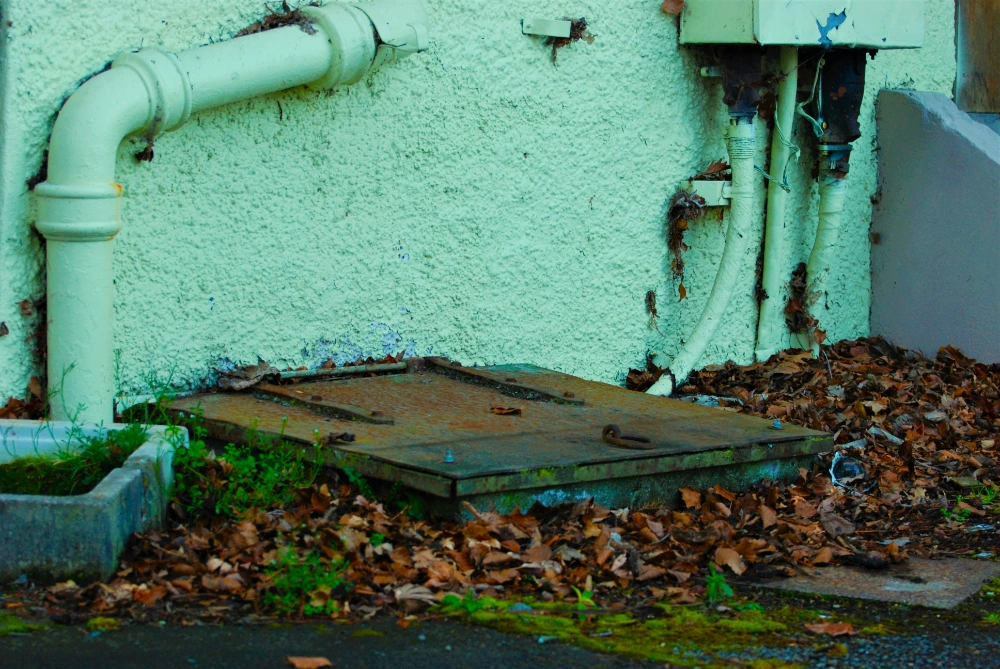
The typical Akron home was built around 1954, and about a third were built before 1940. Many of those homes have:
- Block or clay-tile foundations that soak up water like a sponge
- Old clay footing drains that have clogged with silt or roots, or no drain tile at all
- Little or no exterior waterproofing on the walls
- Downspouts tied into old underground pipes that have collapsed and now dump roof water right at the foundation
Modern homes get a membrane on the outside walls and a footing drain set in clean stone. Most older Akron homes never had either.
Which one is it
How to Tell What’s Causing Your Leak
| What you notice | Most likely cause |
|---|---|
| Water at the floor edge after long rain or in spring | Saturated clay and failed footing drains |
| Damp, dark block walls with white powder | Water soaking through hollow block |
| A crack that leaks more each year | Freeze–thaw widening a crack |
| Leaks right after storms, near a corner | A downspout or grading problem outside |
| Water from floor drains in a big storm | Sewer backup, not groundwater |
Our wet basement repair guide walks through each one in more detail.
What works
What Actually Fixes an Akron Basement
- Get roof water away first. Extend downspouts 6 to 10 feet and slope soil away from the house. It’s cheap and stops many leaks.
- Seal single cracks in poured walls with injection. See crack repair costs.
- Relieve the water pressure with an interior drain and sump pump, the most common full fix in Akron. See interior waterproofing.
- Waterproof from outside when block walls soak through badly. See exterior waterproofing.
- Brace walls that are bowing before the next winter.
Want to know what each option costs? See our Akron cost guides.
Find Out Why Your Basement Leaks
Book a free inspection. We’ll show you where the water is coming from and the simplest fix that will last, with a written price.
FAQ
Akron Basement Leak Questions
Is clay soil bad for basements?
Clay holds water against foundation walls and swells and shrinks with moisture. It’s one of the main reasons Akron basements leak and walls bow.
Why does my basement leak in spring but not summer?
Snowmelt and spring rain soak the soil while the ground is still thawing, so water pressure against the walls is highest in March and April.
Do newer Akron homes leak too?
Less often, because most have exterior coatings and footing drains. But clogged drains, poor grading or downspouts dumping near the wall can still cause leaks.
Can I stop leaks without digging?
Often, yes. Gutters, grading, crack injection and interior drain systems all work without digging down to the footing.