Akron basement tips
Vertical, Horizontal or Stair-Step: What Your Basement Wall Cracks Mean
Almost every basement in Akron has a crack or two. Most are harmless. A few are early warnings of a wall that’s under real pressure. The direction of the crack tells you a lot about which kind you have. Here’s how to read your cracks, what causes each type, and when to call for help.
- The 4 common crack types and what they mean
- Warning signs that a crack is getting worse
- How each type is usually repaired
Why it happens
Why Akron Foundations Crack
Concrete shrinks as it cures, so small cracks are normal in nearly every poured wall. But Akron adds extra stress: clay soil that swells when wet and shrinks when dry, long wet seasons that build water pressure against the walls, and hard freeze–thaw winters.
Many homes here also have block foundations, which crack differently than poured concrete. (See why Akron basements leak for the full local picture.)
The crack types
What Each Type of Crack Means
Vertical cracks: usually the least serious
Straight up-and-down cracks in a poured concrete wall are most often shrinkage cracks from when the concrete cured. They’re common and usually not structural. Their main risk is leaking, because water can follow the crack straight through the wall. Vertical cracks near corners can also be made worse by a downspout dumping water nearby.
Diagonal cracks: usually minor, worth watching
Cracks running at an angle, often from the corner of a window or near the end of a wall, are usually caused by slight settling. Most are minor, but if one gets wider at one end or keeps growing, have it checked.
Horizontal cracks: take these seriously
A crack running sideways along a wall is a sign of pressure from outside: wet, heavy clay soil, water pressure, or frost pushing against the wall. Horizontal cracks often come before a wall starts to bow inward. They should be inspected soon.
Stair-step cracks: common in block walls, and serious
In a concrete block foundation, cracks often follow the mortar joints in a stair-step pattern. These usually point to soil pressure or settling and should be looked at right away, especially if the wall is also leaning or bulging.
Quick guide
Crack Types at a Glance
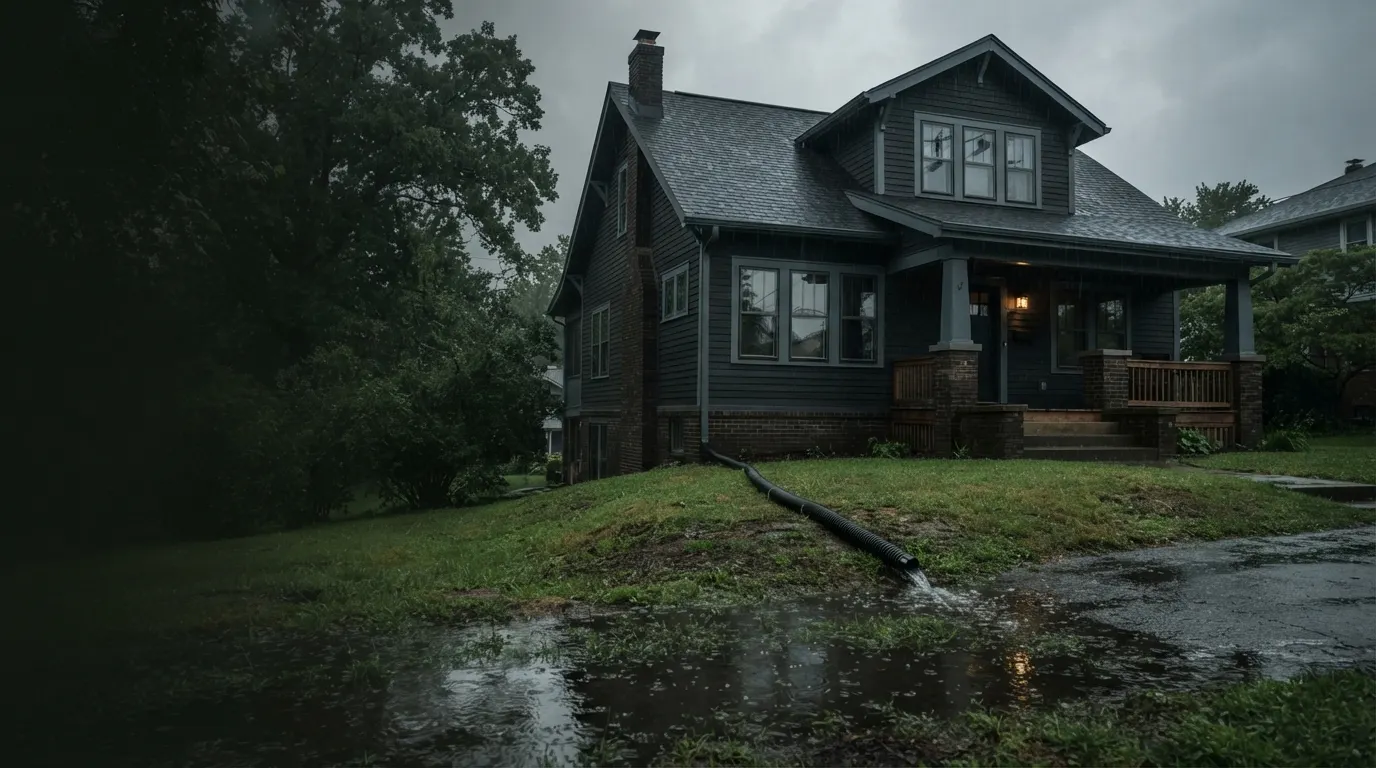
| Crack type | Common cause | How serious? | Usual fix |
|---|---|---|---|
| Vertical (poured wall) | Concrete shrinkage | Usually minor; may leak | Injection to seal the crack |
| Diagonal | Slight settling | Usually minor; watch it | Seal; monitor for movement |
| Horizontal | Soil or water pressure | Serious | Inspect; wall bracing or anchors plus drainage |
| Stair-step (block wall) | Soil pressure or settling | Serious | Inspect; reinforce wall plus drainage |
To see what these repairs usually cost here, read our foundation crack repair cost in Akron guide.
Warning signs
Signs a Crack Is Getting Worse
- The crack is getting longer or wider
- One side of the crack sticks out further than the other
- The wall is leaning, bulging or bowing inward
- Water, dirt or white powder (efflorescence) comes through the crack
- Doors or windows upstairs suddenly stick
- New cracks appear in drywall above the basement
A simple way to track a crack: mark both ends with a pencil, write the date beside it, and take a photo with a ruler or coin for scale. Check it again every month or two. If it moves, call a professional.
If your wall is already bulging inward, read our page on bowed basement walls in Akron.
The fix
How Foundation Cracks Are Repaired
- Leaking but stable cracks in poured walls are usually sealed by injecting them with polyurethane or epoxy from the inside. Learn more about foundation crack repair.
- Cracks from water pressure often need the water handled too, such as interior drain tile and a sump pump, so the pressure doesn’t return.
- Horizontal and stair-step cracks with movement may need the wall reinforced with braces or anchors. Severe cases should be reviewed by a structural engineer.
Sealing a crack without fixing the pressure behind it is like patching a tire that’s still on a nail. A good contractor will look at both.
Not Sure If Your Crack Is Serious?
Book a free inspection. We’ll look at the crack, check the wall for movement and leaks, and give you an honest answer and a written price if it needs work.
Common questions
Foundation Crack FAQs
Are vertical cracks in a basement wall normal?
Yes, thin vertical cracks in poured concrete are very common and usually come from shrinkage. They mainly matter if they leak or keep getting wider.
Are horizontal foundation cracks serious?
Usually, yes. They often mean soil or water pressure is pushing on the wall. Have them inspected soon, before the wall begins to bow.
What do stair-step cracks mean?
In block walls, stair-step cracks along the mortar joints usually point to soil pressure or settling. They should be checked right away.
Can I seal a foundation crack myself?
You can seal a small, dry, stable crack with a DIY kit. Leaking, widening, horizontal or stair-step cracks should be looked at by a professional.
Does a foundation crack mean my house is unsafe?
Most cracks are not a safety issue. But a wall that is leaning, bulging or moving needs prompt attention.